Sunday, 28 June 2015

Don't Worry, Still Here- Apologies and News

As it's been an embarrassingly long time since I last posted anything on here, and I'm still getting at least a few hits every day, it feels worthwhile to at least twitch and moan a little to prove I'm still alive. 

I haven't written anything new because I haven't thought of anything interesting to say. Most of my spare time has been going on trying to learn German and, for no real reason other than curiosity, reading up on Buddhism. I'm also still working on stuff for the ever-enjoyable Project Praeterlimina (we have Things You Can Buy). I've also been working my way through a nice fat collection of essays on Accelerationism in preparation for a talk I'll be giving in September at The Catalyst Club. I'll post my notes on here too, and I'll try to get something I feel worth sharing on here together in the next few weeks. I'm also half-considering trying to *takes deep breath* reading Being and Time all the way through, and trying to keep notes on it as I go. If I do manage to do this, I will try and post things up here relating to that.

In other news, for those of you who wonder what my voice sounds like, rejoice! A friend and I are planning on starting a podcast later this year, hopefully around November time. The general plan is that we'll pick a topic and try to talk about it in as interesting and entertaining a way that we can. Whether not not we'll succeed at it- I have no idea, but it will give me something to do.

Topics we've decided upon in advance include: Anti-Oedipus, Accelerationism and Heidegger. Feel free to make other suggestions in the comments, if you are so inclined.

Finally, some of my friends and I are vaguely planning a new writing project in which we'll explore the now mostly dead genre of, as we are provisionally calling it, British Science Weird. This should be an exploration of the peculiar mix of the provincial and cosmic in British SF, fantasy and horror over the last century, for example in the works of John Wyndham. There's literally no time scale for this at all, but when something does happen, I'll let you all know.

That's essentially it right now. As ever, stay tuned.

Tuesday, 5 May 2015

Amateur Applications of Anti-Oedipal Thinking


After a long and difficult journey, I finished Anti-Oedipus the other day. I might, might write a kind of book review of it in a while, but I thought it worth throwing a few thoughts out there (partly because I'm desperately trying to blog more often) following reading an essay of Nick Land's: 'Making It With Death: Remarks on Thanatos and Desiring Production', about Deleuze & Guattari. I decided to have a crack at it as I made the obvious mistake before of trying to read an essay about Deleuze & (to a lesser extent) Guattari without having actually read any Deleuze & Guattari. And, although it will require some closer reading at some point, the most potent remarks came towards the end, in which Land looks at the shift in emphasis in DeleuzoGuattarian thought away from the absolute, raw deterritorialisation of Anti-Oedipus in its follow-up: A Thousand Plateaus. In a word, Deleuze & Guattari fear that ripping up all the strata of moralising repression may result in the release of the sheer suicidal horror that is Nazism (which is contrasted with, one might say, in borrowing D & G's terminology [which is borrowed from Marx in this case, I believe] the relative Asiatic coolness of the Fascist State). Speaking purely for myself, I would certainly sympathise with that line of thinking, but at present that is neither here nor there.

This is perhaps all a little difficult to follow. From what I understand, the fear grows in D & G's hearts and minds that the call for a radical, radical freedom of identity and discovery that decoding and deterritorialisation issues forth, one that would rid of us what Nietzsche calls 'moralic acid', has the awful potential of becoming the shrieking nightmare of civilisation. That is, there is nothing to restrain the decoded flows from recombining into the racialist, paranoiac-reactionary mechanisms of an Nth Reich. This tendency, this possibility of pushing deterritorialisation too far, is something that needs to be routed, and justifies the rigorous policing of thought.

Some further background for all this.

I have a piece vaguely planned, the working title of which is 'Is Nietzsche's Hammer Left-Handed?' Emphasis on 'working title' there. Anyway, it will be a probably quite superficial discussion about the loss of vitality in the Left, but it's a hell of a long way away as I want to actually try and put some real effort into it. But the thought that accompanies it is, essentially, that there is a puritanical streak in a lot of Leftist thinking, the example par excellence being Social Justice, that strikes me as being not-at-all-dissimilar to the anti-life that Nietzsche diagnosis in Christianity (not a position I entirely agree with, though he certainly latched onto something of enormous importance which I don't believe Christianity has ever made a wholly successful rebuttal to). It is possessed of an obsession with moral purity, in contrast with the evil false-morality of its opponents on the right, typically as exemplified in the nebulous notion of 'privilege'. 'Privilege' implies preference, bias, difference, hierarchy, as opposed to equality and fairness. As has been well-documented, this often includes fanatical attempts at self-policing, at attempts at expunging all trace of 'privilege' from its ranks, including from the souls of its constituent members.

From the above mentioned essay of the good Mr Land's, I present the following observations:

'[Leftist m]orality has become the complacent whisper of a triumphant priest: you'd better keep the lid pressed down on desire, because what you really want is genocide. Once this is accepted there is no limit to the resurrection of prescriptive neoarchaisms that come creeping back as a bulwark against the jack-booted unconscious: liberal humanism, watered-down paganism, and even stinking relics of Judaeo-Christian moralism. Anything is welcome, as long as it hates desire and shores up the cop in everyone's head.' [Fanged Noumena, Urbanomic, 2014, p. 280]

And...

'Trying not to be a Nazi approximates one to Nazism far more radically than any irresponsible impatience in destratification.' [p. 285]

And...

'...Nazism is morality itself, heir to Europe's respectable history: that of witch-burnings, inquisitions, and pogroms. To want to be in the right is the common substratum of morality and genocidal reaction...' [Ibid.]

That is, if I've read this correctly: the Left's obsession with ideologico-spiritual-moral purity is of course NOT identifiable with the Nazi obsession with racial purity, but its attempts at policing itself and expunging all tendency that can be classed as a manifestation of 'privilege' is a suicidal tendency, one that will transform the liberating, revolutionary potential of the Left into nothing more than a paranoiac-reactionary mechanism that will do nothing but replace one system of domination and control with another. The pseudo-Christian theology of Original Sin that SJ seems to deploy against itself, as well as vicious processes of public-shaming and condemnation, all stink of these resurrected 'prescriptive neoarchaisms.' Love and equality and fairness are all very well for us, but as for them...

It is, of course, lazy and inaccurate reasoning to compare the Left with the Nazis, but that is not the point Land is making (if he is, well, it's not the point that I'm making). It should be clear from the fact that Land identifies his 'Nazis' (who are, of course, not the historical Nazis, or at least not entirely) with the 'moralic acid' that the DeulezoGuattarian revolutionary motion is attempting to rid itself of, that the Left's attempts at purifying itself are and will be futile. Its desire to rid itself of impurity (preference, hierarchy, control) makes it little different from what it combats. To paraphrase Nietzsche, it has become what it is battling. Attempting to purge 'Nazi' elements makes nothing but 'Nazis'.

This is an old, old song that I'm singing. It's not an original insight (Land called this in the 90s), but it's one that's worth making. D & G make several passing remarks at how, when one attempts to determine where the Russian Revolution or psychoanalysis went 'bad,' that is, became about control and not liberation, one always ends up going back further and further and further... When did the Left end up like this? When did it become about making us all more afraid, more poor, less happy, less free?

I'm reminded of the old joke:

The Communist Party Central Committee are having a meeting. The General Secretary stands up and says 'Comrades, when the revolution comes, there will be strawberries and cream for everyone!' All his comrades cheer, except for one who says 'But, comrade, I don't like strawberries and cream.'

'Ah,' says the General Secretary, 'that's the beauty of it. When the revolution comes, you will like strawberries and cream.'

*

For the sake of fairness, it should be observed that this is obviously present in Neoreaction. Putting aside the 'Darkside Deleuzianism' of the techno-commercialist current of Neoreaction, with its rampant desire to overthrow regulation of the capital flows and all that can limit the processes of the market, we find something very puritanical and controlling. A lot of Neoreaction is terrified of entryism, and disgusted at the thought of being co-opted by disaffected Cathedral loyalists (the most obvious example being the almost comical response some have at the popularity of Justine Tunney, a transwoman, who is sometimes taken as a kind of unofficial spokesperson for post-Moldbug thought). How about monarchism, neofeudalism, ethno-nationalism and traditionalist Catholicism as 'neoarchaisms' that are terrified at what has been unleashed by the deterritorialising tendencies of modernity?

Deleuze and Guattari's most important observation has already been mentioned above: when one fights, one resembles one's opponent. I'm not a Neoreactionary, but I certainly sympathise with the desire for Exit a lot these days. 

Sunday, 3 May 2015

In Defence of Moderation and Reasonableness

ADDED: the link to The Federalist below contains a transphobic remark. I don't endorse this remotely, as I'm not a transphobe (and I don't mean that in a wish-washy libertarian way either, I actively endorse gender-transition as a legitimate response to one's socially determined gender identity). Just wanted to make that clear.

With the general election only a few days away now, I think it prudent to talk a little about the value of talking. A friend of mine is a Catholic, and at university we often talked about our conflicting opinions on religion, the Church, spirituality and so on. Well, I say 'talked'. Often he'd be irritatingly moderate and reasonable (title drop!) while I'd try and turn him into a kind of socially-conservative straw-man I could then try and rip apart. Try, and usually fail. Again: damn moderate, damn reasonable.

In particular, when same-sex marriage was being debated in Parliament a couple of years ago I was somewhat insistent that it probably wasn't something that we could really discuss, on grounds (call it lazy Wittgenstein-ism) that we inhabited two very different worlds and our definitions of marriage would basically just pass one another by. He, however, would have none of that, and held that there was no good reason at all to try and shut down discussion of the matter just because we came from different religions traditions (I was brought up in a mainline Protestant church and now attend an Anglo-Catholic church, somewhat ironically). And, of course, he was right and I was wrong. There was never any reason to avoid having a serious, moderate and reasonable discussion about what legal redefinition of marriage might entail, for good or ill. 

But there is a worryingly noticeable trend in politics these days that seems hostile towards discussion, towards dialogue. This often feels particularly true of the Left. Indeed, it almost feels as if the Left considers having to explain itself to be an imposition. One sometimes observes almost religious horror when the Left encounters different opinions, as if only monsters could posses them. None of this is exclusive to the Left, of course, there has been much character assassination courtesy of the right too. But I do definitely feel that the single greatest failing of the modern Left is its refusal to feel uncomfortable, its refusal to consider potential flaws in its own arguments. The title of this article from The Federalist says it all- The Paradox of Dogma: How the Left is Crippling Itself. 

Of course, the tone of both the pieces I've linked to suffers from the same problem- they both are, to a greater or lesser extent, attempts to rubbish the Left by accusing it of profound irrationality and intellectual cowardice. They are, of course, wrong to suggest that this is a universal quality of Leftism, but they are right to acknowledge that the tendency is present and, in my experience, the Left is not doing enough to combat this plea for silence rather than conversation. All attempting to avoid dialogue does is miss the opportunity to examine how water-tight one's principles are. If one's principles do not survive their encounter with an opponent in debate, how do you expect them to survive their first brush with reality?

I am picking on the Left here, though. What I am talking about is true of of the Right as well. I just tend to notice it more on the Left, probably because I'm looking out for it and, frankly, because I don't know many conservatives. It does worry me, though, that many people I know who are around my age and come from the same background as I do are Left-wing almost as a matter of course. Another friend of mine, when I was telling him once about Neoreaction, asked me how I could tolerate 'those people'...

Accepting dogmatic Left-wing principles simply because they are in opposition to conservative thought is an act of un-thinking, and nothing more. And, again, this does obviously apply to the Right as well. One wonders if this would have happened if the Right had been more willing to reflect upon its own received wisdom, rather than merely shaking its fist at modernity because it is different.

*

Some final, hopefully both moderate and reasonable points. 

None of the following should ever be considered synonymous with 'Left-wing', 'Right-wing', 'conservative' or 'progressive':

  • Stupid
  • Intelligent
  • Good
  • Evil
  • Always correct
  • Always incorrect
  • So obviously correct we don't need to discuss it
  • So obviously wrong we don't need to discuss it

To refuse to enter into dialogue with your opponent is rarely a sign of intellectual virtue. 


Wednesday, 8 April 2015

In Review: Putin vs Putin by Alexander Dugin

In a rather strange twist of fate, it turns out I went to university with someone who now works at Arktos Media. A while ago, I got a message from her asking if I'd be interested in reviewing the new Dugin book, Putin vs Putin. Alexander Dugin is someone I was, of course, very much aware of, and I approached the opportunity to delve a little into his world with curiosity and, to be honest, trepidation.

What an odd, odd book this was to read. It is constructed from several years of work assembled thematically (I assume). As these individual papers were often written years apart, the experience of reading the book is a very disjointed one. Further to that, Dugin has written much of it with the (understandable as these were all originally published in Russian) assumption that the reader will already be largely aware of most of the events and individuals he's discussing. To the credit of the fine folk responsible for editing and translation, the copious footnotes are able to resolve this, but having to work through long lists of Russian names at the bottom of almost every page to figure out who Dugin is attacking or praising is a laborious task.

It was not a fun read. Indeed, considering its short length, it took me an embarrassingly long amount of time to read it, with many pauses in which I fled to read more accessible books, or made serious in roads into equally strange but somewhat more palatable books. A serious problem was that it was consistently substantially more interesting when it wasn't actually talking about Vladimir Putin. The digressions Dugin takes to discuss the various competing schools of radical conservatism, his geopolitcal theories, his defence of Russian Christian nationalism and, of course, his robust assertions of Tradition and the Fourth Political Theory are all compelling and fascinating (though I think it a good idea to state at this point, just to avoid any ambiguity, I do not agree with him), while his long discussions on what Putin's actions mean, what the people around the President want, and so on, and so on, became rather tedious. This tedium was likely more to do with, as I've said above, the unfamiliarity the reader is likely to have with many of the individuals that Dugin devotes his attention to. Only a student of contemporary Russian politics is likely to be able to follow the paths that Dugin takes around these people and events.

However, the single biggest problem with the book is that it simply shouldn't exist in the format it does. Like I said, this is put together from over a decades worth of separately written pieces of work. As such, this book should have been compiled in one of two ways, either as an anthology of these pieces with notes on the context of the writing of each one (perhaps with Dugin's comments on whether or not he still agrees with the position presented in each piece), arranged chronologically, or thematically maybe; or, these original texts should have been taken as the substance for a new, original work, in which Dugin would chart how his opinions on Putin and the Russian situation have shifted over the years. In so writing, the repetitions and contradictions could have been easily resolved through simple editorship and contextualisation. It seems that (I imagine this is the fault of the editors or publishers of the original Russian edition) the book is attempting to be the latter, but this wasn't properly or fully executed.

As to whether or not it's worth reading: with hesitation, I would say 'yes'. How much the reader's life is likely to be enriched by the experience, I cannot say. Probably reasonably little. This being said, the book is a valuable reminder that the liberal order is not as secure as many of us, myself included, would like to believe. A substantial number of very powerful people consider our paradise to be their hell. That is the hard lesson of the 21st Century for the West, and Dugin seems to almost delight in it.

Some final words. Dugin's shifting portraits of Putin are confounding, as the picture blurs frequently into something new, but that is indeed exactly the point. Putin, Dugin concludes, is a sheer pragmatist. He is the ultimate postmodern politician, he is a liberal and reformer and a moderniser and an imperialist and a patriot and defender of Christendom, all at once, depending on the time of day. This pseudo (super?) position is emphasised by the apparent lack of personality of the man. What can we say about Putin's character? Nothing. All we can speak of are his deeds, which are rarely enough to satisfy Dugin's vision of a new, masculine and sacred Russia, a vision it is by no means clear Putin shares any more than it is politically expedient for him to share. Because of this emptiness, Putin can become Dugin's almost-messiah and the West's monster without necessarily really being either.

Despite all this, I could not ever quite shake the thought from my head that Dugin failed to entertain one important possibility: is Putin maybe simply in it for himself?

For some, power is an ends in itself.

Saturday, 21 March 2015

Not a Hiatus, Just Laziness

Hello. I'm still here. Busy being a lackey of capitalism, and I've not thought of anything particularly interesting to write since...well, my last post on here.

I'll pull my finger out and try and scribble something down sooner rather than later, hopefully. Though, be warned, I might just end up 'analysing' a Nine Inch Nails music video or something just to get back in to the habit of writing (i.e. it'll be superficial crap dressed up as if it were profound).

But, hopefully, it'll be entertaining.

Stay tuned...

Wednesday, 11 February 2015

Lovecraft Country, UK

A few years ago now, I introduce a friend to a couple of films: The Texas Chainsaw Massacre and The Exorcist. The latter is...perhaps not best described as one of my 'favourite' films, but it is a film that I admire enormously. The Texas Chainsaw Massacre, on the other hand, is a film that I appreciate somewhat less. Very good, of course, especially in its build up of atmosphere, its creation of an otherworldly-ness without appeal to the supernatural, but...I don't know. It leaves me a little cold.

My friend shared this view, along with an interesting observation: The Texas Chainsaw Massacre is not as scary as The Exorcist because it happens in, well, Texas, a very specific and localised zone. It has to happen there and not here. Its horror, its monsters, are rooted in a particular geography, a particular context. The Exorcist, on the other hand, could occur here. The monster, the demon, is not tied down to a particular locale. The preamble suggests its origins in the Middle East, out of very distant history. It manifests itself in the United States, in the possession of a young girl far, far removed from where the force emerges from. It doesn't matter where it happens, it can happen anywhere.

It could happen here, in our home.

I heard somewhere that, back in the 80s during the 'Video Nasty' panic, one of the arguments made for strict regulation of home videos went along these lines: it is one thing to go to a cinema to see a violent movie, but quite another to experience that in your own home. Going to the cinema removes the film from the homestead, but bringing it into the home, into the place where one is meant to be safe, that has potential for great danger. The danger is that experiencing something horrific in one's own home undermines its feeling of security, its safety, its very homeliness.

However, I want to discuss another kind of horror. The realisation that the homely was, in fact, never homely at all.

*

Regular readers of this blog will know that I'm fond of my walks. Last weekend, I departed from my usual route and found this:


I knew that this monument existed but I wasn't expecting something so...cinematic. Things only got better, however:


This was spooky. Very spooky. This is what I want to explore in this post, a feeling of horror in the home that is not that of the intruder. It is, rather, the recognition of the unhomeliness of the homely. That is, discovering that one's home, the familiar, contains and always has contained an unfamiliar, unsafe dimension. Not that something foreign has entered and changed things, but rather discovering that home was always foreign. This is the feeling so well expressed in David Lynch's Twin Peaks and Blue Velvet. The hidden-yet-always-present wrongness of the homely.

That was the feeling I had when I came across this site. This wasn't Texas, this was home. And in home, my home, there was something scary, something wrong, something unfamiliar. You might think that that's a lot to read into a disused farming structure, but the atmosphere, the setting sun, the cold, the silence, the remoteness, the strangeness of it made for a powerful experience.

I live on the outskirts of the city, and as such I'm treated to an unusual environment where, on one side, there is the city and modernity, and on the other side I can walk for miles and meet less than a dozen people. I can simply venture out and walk, and see where I end up. As such, there has always been a feeling of living on a border, that beyond there lies...the outside. There is the rational realisation that this is not the case, that there lie suburbs and towns and villages and roads and pylons, but that isn't how it feels.

I digress.

This is the feeling that Lovecraft is able to conjure. That the horror does not reside far away, it is close, it is near, it is here and always has been. The Old Ones are not a foreign element, they have been here far longer than we have. Our homes where never our homes, they were always unhomely. To notice something that has always been unnoticed, and yet always present, that is so deeply uncomfortable that it is difficult to articulate the sensation.

I think that this is part of the special frisson that the conspiracy theory is able to produce. I treat conspiracy theories as a kind of myth-making, an elaborate, world-structuring fiction whose fictitiousness is not known to those who possess them. Perhaps the appeal is the same appeal as that of a Lovecraft or a Ligotti: beneath the surface of the familiar is something utterly unfamiliar. Familiar things that, nominally, guarantee our security and freedom are, in fact, undermining and robbing us of both these things. Worse than that: these are things we never possessed. The familiar was always other. The government is not and has never been corrupt, it has always been the Illuminati and that is that.

The planes overhead are leaving something in the air...

The schools, the universities, they're brainwashing the youth...

President Kennedy wasn't assassinated, he was sacrificed...

The successful conspiracy theory functions on the same level as a successful horror story.


*
I had a dream recently.

I dreamt that near where I live, there was an installation, scientific-military. It was an array of large satellite dishes, angled skywards. Everyone knew, and had always known, that these were not innocent, that they were there for a reason that was not being admitted publicly. That they weren't right. 

It wasn't a dark night. The sky was a pale blue, as if it were lit up by a full moon. A kind of not-night. And I am there, near this array which is there for a reason we can only guess at, and there is a man with me. He points to the sky, the clear not-night sky, and I can see around the stars a rippling, like a heat haze. The man says: 'You see that? If you look closely, you can see HAARP at work!'

Sunday, 1 February 2015

Reads of 2014

In order to prove I am still alive and am still writing, I have decided to perform the relatively simple act of Writing About Things I Have Read. I set myself two rules when constructing this list: I can't count books I've not finished, including anthologies (meaning I have to ignore One Hundred Years of Solitude, Fanged Noumena and House of Leaves). Blogs don't count, but individual pieces on blogs do. The absolute best book I read last year was The Kindly Ones, which I've already written about.

These aren't in any particular order.

Oryx & Crake by Margaret Atwood


Disturbing, shocking, moving, DEFINITELY NOT SCIENCE FICTION, and only the second Atwood novel I've read, Oryx & Crake was a superb read. A frightening vision of the future as it very well could turn out, and an equally frightening reflection on the uncomfortable contingency of human domination of the world, and even on the need for something that at least does the job of religion, I cannot recommend this book enough.

The book follows the same character along two narrative lines, one set after the (initially nameless) apocalypse, the other winding its way to the events that leave humanity virtually extinct. As such, we know from the beginning that things aren't going to turn out exactly happily ever after. Depressing, yes, but also oddly, though quietly, hopeful. Not read the sequels yet, though I think I'll make them my next read.


The Rediscovery of Man by Cordwainer Smith


A potent reminder of how imaginative science fiction can be, the criminally under-appreciated Cordwainer Smith (seriously, check out the Wiki. His godfather was Sun Yat-Sen, he was an advisor to President Kennedy and he literally wrote the book on psychological warfare) was a force to be reckoned with. Combining prose that borders on the mythic with an almost uncomfortably heart-felt moral conviction, rooted in his adopted Anglican Christianity, Smith's science fiction is unlike anything I've come across before.

An anthology all set in the same universe, The Rediscovery of Man is reminiscent of Dune with its far-future humanity wracked with decadence and ennui, reliant on the life-extending Santaclara drug, also called 'Stroon', which is found on only one planet in the known universe. The comparisons more or less end there. Humanity is governed by the Instrumentality of Mankind, almost God-like human beings that guard and guide the destiny of the species, defending it from threats that the rest of humanity do not even know exist. There are also the Underpeople, animals radically altered to resemble and think like humans who are used as slaves; the plight of the Underpeople and their struggle for civil rights is one of the major moral, religious and political themes of Smith's stories.

It is very difficult to put in to words how imaginative Smith was. The first story, 'Scanners Live in Vain,' features a caste of modified human beings designed to pilot the great space craft of the Instrumentality, but at the cost of having no sensory perceptions other than sight, meaning they can only communicate by lip-reading and semaphore, and can only tell if they've been damaged by checking the instruments implanted in their chest.

Another story also has a psychic death-ray powered by psychopathic kittens.

Smith was weird, glorious and deserves your attention.

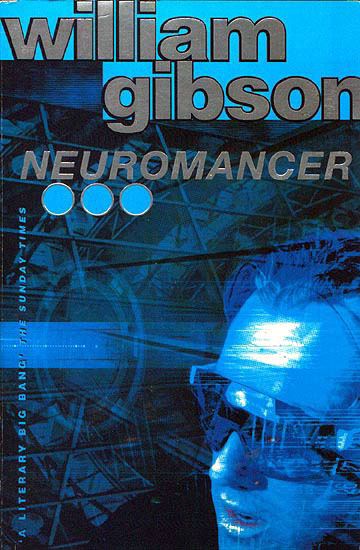
Neuromancer by William Gibson

I wasn't expecting to enjoy Neuromancer quite as much as I did. It gets a lot of bad press for being badly written, though conceptually brilliant. I just really liked it. I approached it with a sense of duty, of having to read this book in order to appreciate its impact, and realised that...it's actually quite well written. Yeah, it's a pulp novel at heart, but it's on the better end of the pulp spectrum. Better than a lot of Lovecraft, even. Some of it isn't as well executed as it could have been, but a lot of it really is.

Creepy, uncomfortable, clever. One of the most accurate (thematically at least) predictions of the future in science fiction to date, forgiving him the absence of mobile phones. Powerful and important, its biggest problem for the modern reader is the fact of its impact. So much of it seems utterly clichéd now that it only becomes bearable when one remembers that this was the first example in fiction of so much that is now genre convention.

There's little else to say: read it, but don't bother with the sequels.


I remember...I remember that once there was...sunshine...and bird song...and laughter...during the...before the...
*inhuman shrieking*


The Difference Engine by William Gibson & Bruce Sterling


Suffering from a similar fate as Neuromancer in that the scope of its influence somewhat overshadows its own merits as a novel, the saving grace of The Difference Engine is that, on its own, it is much, much better than Neuromancer. A seminal work of alternative history in general, and steampunk generally, depicting a Victorian Britain were Babbage's clockwork computers have brought about sweeping social change. Neither substance nor style overshadow one another, nor do we have to wade through clumsy exposition. The world that Gibson and Sterling have created is one that they only show us glimpses of, hinting at a wider picture without offering us too many details. Frustrating, yes, but the right kind of frustrating.

Forgiving it the narrative laziness of relying on a MacGuffin (the pay off isn't quite worth it, but the coda that follows certainly is), the book's greatest strengths lie in the ideas being presented to the reader. How culture and contingency effects ideology; the relationship between technology, environment and human development; the question of whether or not technology has really made us any more free or simply locked us into a more subtle slavery. The imagery is evocative, the characters a little lacking, perhaps, but the style, concepts and language are excellent, truly excellent throughout.

*

Bringing this to a close, a few other great books I read last year were: The Children of Men by the late Baroness James, The Sadean Woman by the even-later Angela Carter, Accelerando by Charles Stross (number 6 on Noah's list) and the provincial, apocalyptic joy that is John Wyndham's The Day of the Triffids. 

I will happily accept recommendations for further reading in the comments.