Wednesday, 11 February 2015

Lovecraft Country, UK

A few years ago now, I introduce a friend to a couple of films: The Texas Chainsaw Massacre and The Exorcist. The latter is...perhaps not best described as one of my 'favourite' films, but it is a film that I admire enormously. The Texas Chainsaw Massacre, on the other hand, is a film that I appreciate somewhat less. Very good, of course, especially in its build up of atmosphere, its creation of an otherworldly-ness without appeal to the supernatural, but...I don't know. It leaves me a little cold.

My friend shared this view, along with an interesting observation: The Texas Chainsaw Massacre is not as scary as The Exorcist because it happens in, well, Texas, a very specific and localised zone. It has to happen there and not here. Its horror, its monsters, are rooted in a particular geography, a particular context. The Exorcist, on the other hand, could occur here. The monster, the demon, is not tied down to a particular locale. The preamble suggests its origins in the Middle East, out of very distant history. It manifests itself in the United States, in the possession of a young girl far, far removed from where the force emerges from. It doesn't matter where it happens, it can happen anywhere.

It could happen here, in our home.

I heard somewhere that, back in the 80s during the 'Video Nasty' panic, one of the arguments made for strict regulation of home videos went along these lines: it is one thing to go to a cinema to see a violent movie, but quite another to experience that in your own home. Going to the cinema removes the film from the homestead, but bringing it into the home, into the place where one is meant to be safe, that has potential for great danger. The danger is that experiencing something horrific in one's own home undermines its feeling of security, its safety, its very homeliness.

However, I want to discuss another kind of horror. The realisation that the homely was, in fact, never homely at all.

*

Regular readers of this blog will know that I'm fond of my walks. Last weekend, I departed from my usual route and found this:


I knew that this monument existed but I wasn't expecting something so...cinematic. Things only got better, however:


This was spooky. Very spooky. This is what I want to explore in this post, a feeling of horror in the home that is not that of the intruder. It is, rather, the recognition of the unhomeliness of the homely. That is, discovering that one's home, the familiar, contains and always has contained an unfamiliar, unsafe dimension. Not that something foreign has entered and changed things, but rather discovering that home was always foreign. This is the feeling so well expressed in David Lynch's Twin Peaks and Blue Velvet. The hidden-yet-always-present wrongness of the homely.

That was the feeling I had when I came across this site. This wasn't Texas, this was home. And in home, my home, there was something scary, something wrong, something unfamiliar. You might think that that's a lot to read into a disused farming structure, but the atmosphere, the setting sun, the cold, the silence, the remoteness, the strangeness of it made for a powerful experience.

I live on the outskirts of the city, and as such I'm treated to an unusual environment where, on one side, there is the city and modernity, and on the other side I can walk for miles and meet less than a dozen people. I can simply venture out and walk, and see where I end up. As such, there has always been a feeling of living on a border, that beyond there lies...the outside. There is the rational realisation that this is not the case, that there lie suburbs and towns and villages and roads and pylons, but that isn't how it feels.

I digress.

This is the feeling that Lovecraft is able to conjure. That the horror does not reside far away, it is close, it is near, it is here and always has been. The Old Ones are not a foreign element, they have been here far longer than we have. Our homes where never our homes, they were always unhomely. To notice something that has always been unnoticed, and yet always present, that is so deeply uncomfortable that it is difficult to articulate the sensation.

I think that this is part of the special frisson that the conspiracy theory is able to produce. I treat conspiracy theories as a kind of myth-making, an elaborate, world-structuring fiction whose fictitiousness is not known to those who possess them. Perhaps the appeal is the same appeal as that of a Lovecraft or a Ligotti: beneath the surface of the familiar is something utterly unfamiliar. Familiar things that, nominally, guarantee our security and freedom are, in fact, undermining and robbing us of both these things. Worse than that: these are things we never possessed. The familiar was always other. The government is not and has never been corrupt, it has always been the Illuminati and that is that.

The planes overhead are leaving something in the air...

The schools, the universities, they're brainwashing the youth...

President Kennedy wasn't assassinated, he was sacrificed...

The successful conspiracy theory functions on the same level as a successful horror story.


*
I had a dream recently.

I dreamt that near where I live, there was an installation, scientific-military. It was an array of large satellite dishes, angled skywards. Everyone knew, and had always known, that these were not innocent, that they were there for a reason that was not being admitted publicly. That they weren't right. 

It wasn't a dark night. The sky was a pale blue, as if it were lit up by a full moon. A kind of not-night. And I am there, near this array which is there for a reason we can only guess at, and there is a man with me. He points to the sky, the clear not-night sky, and I can see around the stars a rippling, like a heat haze. The man says: 'You see that? If you look closely, you can see HAARP at work!'

Sunday, 1 February 2015

Reads of 2014

In order to prove I am still alive and am still writing, I have decided to perform the relatively simple act of Writing About Things I Have Read. I set myself two rules when constructing this list: I can't count books I've not finished, including anthologies (meaning I have to ignore One Hundred Years of Solitude, Fanged Noumena and House of Leaves). Blogs don't count, but individual pieces on blogs do. The absolute best book I read last year was The Kindly Ones, which I've already written about.

These aren't in any particular order.

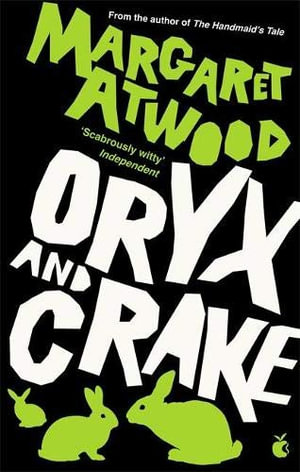
Oryx & Crake by Margaret Atwood


Disturbing, shocking, moving, DEFINITELY NOT SCIENCE FICTION, and only the second Atwood novel I've read, Oryx & Crake was a superb read. A frightening vision of the future as it very well could turn out, and an equally frightening reflection on the uncomfortable contingency of human domination of the world, and even on the need for something that at least does the job of religion, I cannot recommend this book enough.

The book follows the same character along two narrative lines, one set after the (initially nameless) apocalypse, the other winding its way to the events that leave humanity virtually extinct. As such, we know from the beginning that things aren't going to turn out exactly happily ever after. Depressing, yes, but also oddly, though quietly, hopeful. Not read the sequels yet, though I think I'll make them my next read.


The Rediscovery of Man by Cordwainer Smith


A potent reminder of how imaginative science fiction can be, the criminally under-appreciated Cordwainer Smith (seriously, check out the Wiki. His godfather was Sun Yat-Sen, he was an advisor to President Kennedy and he literally wrote the book on psychological warfare) was a force to be reckoned with. Combining prose that borders on the mythic with an almost uncomfortably heart-felt moral conviction, rooted in his adopted Anglican Christianity, Smith's science fiction is unlike anything I've come across before.

An anthology all set in the same universe, The Rediscovery of Man is reminiscent of Dune with its far-future humanity wracked with decadence and ennui, reliant on the life-extending Santaclara drug, also called 'Stroon', which is found on only one planet in the known universe. The comparisons more or less end there. Humanity is governed by the Instrumentality of Mankind, almost God-like human beings that guard and guide the destiny of the species, defending it from threats that the rest of humanity do not even know exist. There are also the Underpeople, animals radically altered to resemble and think like humans who are used as slaves; the plight of the Underpeople and their struggle for civil rights is one of the major moral, religious and political themes of Smith's stories.

It is very difficult to put in to words how imaginative Smith was. The first story, 'Scanners Live in Vain,' features a caste of modified human beings designed to pilot the great space craft of the Instrumentality, but at the cost of having no sensory perceptions other than sight, meaning they can only communicate by lip-reading and semaphore, and can only tell if they've been damaged by checking the instruments implanted in their chest.

Another story also has a psychic death-ray powered by psychopathic kittens.

Smith was weird, glorious and deserves your attention.

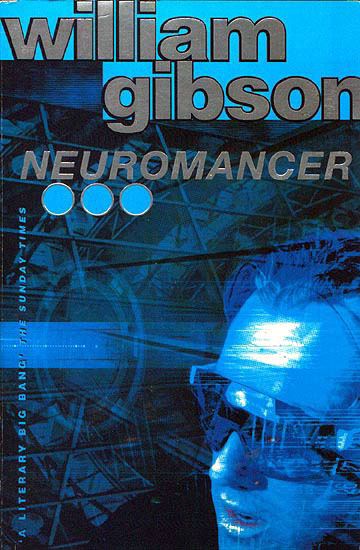
Neuromancer by William Gibson

I wasn't expecting to enjoy Neuromancer quite as much as I did. It gets a lot of bad press for being badly written, though conceptually brilliant. I just really liked it. I approached it with a sense of duty, of having to read this book in order to appreciate its impact, and realised that...it's actually quite well written. Yeah, it's a pulp novel at heart, but it's on the better end of the pulp spectrum. Better than a lot of Lovecraft, even. Some of it isn't as well executed as it could have been, but a lot of it really is.

Creepy, uncomfortable, clever. One of the most accurate (thematically at least) predictions of the future in science fiction to date, forgiving him the absence of mobile phones. Powerful and important, its biggest problem for the modern reader is the fact of its impact. So much of it seems utterly clichéd now that it only becomes bearable when one remembers that this was the first example in fiction of so much that is now genre convention.

There's little else to say: read it, but don't bother with the sequels.


I remember...I remember that once there was...sunshine...and bird song...and laughter...during the...before the...
*inhuman shrieking*


The Difference Engine by William Gibson & Bruce Sterling


Suffering from a similar fate as Neuromancer in that the scope of its influence somewhat overshadows its own merits as a novel, the saving grace of The Difference Engine is that, on its own, it is much, much better than Neuromancer. A seminal work of alternative history in general, and steampunk generally, depicting a Victorian Britain were Babbage's clockwork computers have brought about sweeping social change. Neither substance nor style overshadow one another, nor do we have to wade through clumsy exposition. The world that Gibson and Sterling have created is one that they only show us glimpses of, hinting at a wider picture without offering us too many details. Frustrating, yes, but the right kind of frustrating.

Forgiving it the narrative laziness of relying on a MacGuffin (the pay off isn't quite worth it, but the coda that follows certainly is), the book's greatest strengths lie in the ideas being presented to the reader. How culture and contingency effects ideology; the relationship between technology, environment and human development; the question of whether or not technology has really made us any more free or simply locked us into a more subtle slavery. The imagery is evocative, the characters a little lacking, perhaps, but the style, concepts and language are excellent, truly excellent throughout.

*

Bringing this to a close, a few other great books I read last year were: The Children of Men by the late Baroness James, The Sadean Woman by the even-later Angela Carter, Accelerando by Charles Stross (number 6 on Noah's list) and the provincial, apocalyptic joy that is John Wyndham's The Day of the Triffids. 

I will happily accept recommendations for further reading in the comments.

Friday, 9 January 2015

NRx Talk at The Catalyst Club 08/01/15

The following was delivered to The Catalyst Club on 8th January, 2015. The audience response was very positive, I'm pleased to say. Readers who are already familiar with NRx will probably notice that this talk was, arguably, less about NRx than Neocameralism, though I do throw in some stuff about The Cathedral and hint at Gnon. 

Biggest lacuna: not mentioning HBD. 

There is a difference between being interested in an idea, in entertaining an idea, and agreeing with that idea. Wanting to discuss an idea, and being curious about its ramifications if put into practice, does not equate advocating that idea. What I am going to be talking about tonight are not necessarily things that I believe or disbelieve in, they are simply things that I am interested in. Tonight, I am going to talk to you about something called ‘Neoreaction.’ You may have heard of it, but I wouldn’t be surprised if you haven’t. It is somewhat obscure, and it haunts areas of thinking that most normal, healthy folk prefer to leave unthought.

Fortunately for you, I am not one of those normal, healthy folk. I’m of the grim variety, preferring to dress in black and listen to 80s electro and pretend I’m in a cyberpunk movie. Early last year, a series of coincidences lead to me coming across a most unusual bunch on the Internet. They were drawn from many strange and diverse backgrounds, and seemingly didn’t have much in common: they included traditionalist Catholics, neo-Pagans, ultra-libertarians and even a few with this funny idea about bringing back feudalism. Indeed, it seemed that these peculiar people were better defined by what they didn’t believe in than by what they believed in.
They have a name for the ideas they disagree with, and the institutions that perpetuate them: The Cathedral. They have a name for themselves too: they are Neoreactionaries.

Now, to make a few things clear before we continue:

There is not a Neoreactionary ‘movement.’ Neoreaction is, what I like to call, a meta-movement. It is more like Marxism than a Communist Party. It is a web of ideas and theories, discussed and promoted and held by a web of individuals. There is no Central Committee, though there are big names who hold more influence than others. It exists pretty much exclusively online, primarily in the form of blogs (I’ll provide a list of links to anyone who’s interested).

The Cathedral is why the western world (and by hegemonic extension, most of the rest of the world) is how it is. The Cathedral is not the Illuminati, it is not a conspiracy. It’s more like, to use an example from the blogger Scott Alexander, what feminists call ‘The Patriarchy.’ The Cathedral’s foundations are attitudes and beliefs, its spires and buttresses the institutions and individuals who hold and promote these attitudes and beliefs. These institutions include the media, the universities, and governments. The people are typically middle-class and well educated, commanding a great deal of moral authority, even if they have little directly obvious political sway. What The Cathedral does is form public opinion, both on the left and the mainstream right (although the right accepts Cathedralist ideas with much more hesitation than the left). The Cathedral is like an ideological feedback loop: it generates ideas that it already considers to be correct, and presents them as self-evident, criticising dissenting ideas, institutions and individuals accordingly.

The ideas that form The Cathedral are of a distinctly Enlightenment feel, emphasising the notion that the world can be regulated or ordered systematically, that historical progress is real, that things can (and will) only get better. The Cathedral, according to Neoreaction, is probably where more-or-less all of your ideas about politics and history come from.

The Cathedral is why you believe that there is no better form of government than democracy.

The Cathedral is why you believe that human beings are equal.

The Cathedral is why you believe that everyone, deep down, is a member of one great big human family.

The Cathedral, says Neoreaction, is wrong.

The Cathedral as a concept was outlined by the infamous blogger ‘Mencius Moldbug.’ The Cathedral is the name he gives to the institutions that promote the ideals of Modernity, in particular the notions of democracy, equality and universalism, and the idea that history is a clear progress from a worse way of life to a better one. The standard narrative The Cathedral holds is that we can see a clear line of progress throughout recent history. Beginning with the monarchies of feudal Europe, we see, in The Enlightenment, the gradual (or in some places rapid) seizure of power by the educated and mercantile classes and the decay of the authority of the Church, allowing for the rise of modern science and technology, the establishment of democratic government and the recognition of the essential equality and fraternity of humanity. This is presented as a clear progression from an evil, irrational way of organising things to a good and rational way.

Moldbug questions this narrative. I shan’t go into details about Moldbug’s theories about where these ideas come from, but it is suffice to say that he considers them to be historically contingent and, ultimately, arbitrary products of the environment that produced them. As such, they’re not necessarily good ways of organising society. Indeed, Moldbug and Neoreaction think they’re pretty darn stupid ways of doing it.

This is because they deny reality.

Neoreaction has a vast number of internal divisions and disagreements, but a few ideas are held broadly in common: that human beings are in no sense (except, possibly, a spiritual sense) equal; that human populations are not ‘fungible’, but unique and distinct; and that democracy is not an efficient way of ordering a society. As such, Neoreactionaries typically favour the notion of a hierarchical, even autocratic society, or at least one with dramatically limited suffrage. Because I am short on time, I am going to focus on the democratic question.

The chief democratic flaw is the following: the assumption that a population, when taken as a whole, is capable of choosing a government that will actually be good at governing. Why do we think that an election results in good government? Because those elected know that if they do too bad a job of running the country, they’ll get booted out in the coming election. Except, of course, it isn’t as simple as that. A democratically elected government consists of people, and people are self-interested. The people that form a democratically elected government know that, even if they keep winning elections, they’re only there for a little while, a few years at the most. As well as this, even a government that is doing what in the long run would have turned out to be good decisions can still loose an election because of the unpopularity of short-term policies, regardless of the fact that these policies may have major long-term benefits if implemented and maintained. As such, the promises that they tend to make to the electorate are simply those that make them likely to win. And when in power, why not simply favour policies that will have an immediate, short-term benefit for those making the policies? They’ll be out of a job sooner or later, why not simply steal everything out of the office stationary cupboard before they go?

As well as this, Neoreactionaries don’t believe democracy to be particularly democratic anyway. It was put somewhere that in a society where theoretical power is held by the people, real power is held by those who form public opinion, which for Neoreaction is The Cathedral. As such, it is really The Cathedral that holds power in the West, albeit mostly indirectly.

It is important here to note the major libertarian influence on Neoreaction. There has been an attitude among some right-libertarians, or anarcho-capitalists, for a long time now that, to paraphrase Peter Thiel: democracy and liberty are not compatible. It is felt by Neoreactionaries that democracy, as a cultural force, can only lead to the growth of government, its increased intrusion into the lives of its people, and the continual mismanagement of the country, often under the guise of a utopian, typically socialist or otherwise populist or nationalist spirit (again, The Cathedral). What, then, ought to be done about it?

Well, if we begin by accepting that governments are made of people and people are self-interested, and go on to recognise that democratic government is so organised that what is to the advantage of those with power is not to the advantage of those ruled over, the only effective option is to create another kind of power-structure, either outside of or instead of the prevailing democracies, a power-structure where there is not such a conflict of interest.

In other words: replace the democratic state with a joint-stock corporation.

Or, as some Neoreactionaries prefer: a king. Literally, a king. A hereditary monarchy and feudal aristocracy.

The latter suggestion is the one most people who have heard of Neoreaction associate with it, but it is the former that I’m more interested in. As such, what follows shouldn’t be taken as ‘the official Neoreactionary position,’ and there are a sizeable group of Neoreactionaries who reject the notion of corporate government in its totality.

The theory of corporate government goes something like this: if the country, or city-state or whatever, is governed by a corporation that delivers services like- guaranteed safety in public places, guaranteed neutral arbitration of contracts and efficient public transport, and charges residents a fee for these services, and (very importantly) guarantees the right to leave with one’s family and property if one chooses- so long as the corporation delivers on its guarantees, why complain you don’t get to choose the CEO? You can’t choose the CEO of any of the other businesses you have anything to do with, so why would you expect to choose the CEO of this business? Even better, if there are numerous, competing corporate-states, each one can tailor itself to a particular market, attempt to outdo the others with exclusive lifestyle offers (like to get high? I’d bet that BrightonCorp would like to make you an offer…). The wonderful thing about this is that the corporation isn’t answerable to its customers, except through consumer choice, and it is in the direct financial advantage of the rulers to rule well, that is, to satisfy its customer’s demands for personal freedom and security.
Of course, The Cathedral stands in the way of this. The Cathedral has such faith in its ideals that it does not even attempt to justify them. Why, for example, are we so insistent that it is always a good thing when a country becomes more ‘democratic’? What if some cultures flourish better under an authoritarian government?

Typically, Neoreaction does not seek to overthrow the prevailing system of government in a traditional sense (revolutions are far too populist, and Neoreaction is defiantly elitist), though there are exceptions who praise the growing illiberalism of Russia and Hungary, even going as far as to describe Russia as a potential Neoreactionary nation-state. The particular current of Neoreaction I have been discussing, the post-libertarian, typically describes its position as secessionist, valuing the right to exit over the right to have a voice. They don’t want to change the society they live in: they simply want to Get Out.

The desire to Get Out is informed also by a fear that as The Cathedral is a simply unsustainable model of living, when it collapses things will get a little messy. One of the most popular sayings in Neoreactionary circles is ‘Winter is coming.’ That is: once The Cathedral finally falls, if we haven’t Gotten Out it will take us all with it. The crisis in Ukraine, the rise of Islamic State, the growing support of extreme right and left political parties are all interpreted by Neoreaction as omens that the myths The Cathedral has being feeding us (that we’re all one great big happy human family, and that, deep down, human beings really just want to co-operate and so on) are starting to lose ground, and that the harshness of reality, Kipling’s Gods of the Copybook Headings, are preparing to return with ‘terror and slaughter.’ That Cthulhu is finally stirring… And, as The Cathedral cannot be directly opposed, what other option is there other than to run?

Bringing this to a close, I’m going to briefly address why I find Neoreaction so fascinating.


I graduated last year, and after three years of experiencing student politics, the only variations of which tend to be complete indifference or half-arsed communism, encountering a lot of clearly clever people who were right-wing was an exceptionally novel experience. In particular, I find their speculation about alternative ways of ordering society to better maximise freedom and stability very compelling. There is certainly something almost romantic about the secessionist impulse, the desire to cut oneself off from the modern world and go and do things very differently. I want to see a patchwork of corporate states set up simply to see what would happen. And, if I’m being honest, the sheer pessimism they have about the future appeals to the horror fan inside me. If nothing else, Neoreaction provides us with a platform for criticism. In a similar way to how Marxism acts more as a source of critique than a source of solutions, Neoreaction gives us a narrative alternative to the prevailing one. There is value to it simply in that. Most importantly, I feel, is that Neoreaction calls on us to question the role those who inform us play, to question the assumptions that they work under and present us with, and to question the agenda that they may or may not have. Regardless of the answer we may get, there is value simply to the questioning. 

Saturday, 20 December 2014

All The World's A Film Set

I'm one of those people who wanders around with earphones in all the time. I'm also one of those people who thinks about what things 'mean', and this stupid, simple habit of mine is no exception. I've written before about the aesthetics of nature, and it occurred to me when I was writing the essay I culled that from back in the spring that it would be interesting to apply this to the urban landscape, which I shall do at a later date, as well as the natural (read 'natural' as exactly what you think I mean by 'natural'). This, in turn, lead me to dwell on the observation that when we're dealing with what we may call environmental-ambient aesthetics, the aesthetics of the locale, technology has allowed us to introduce the dimension of music to it in a way that was not previously possible.

In essence: we can literally add a soundtrack to our lives. 

Of course, the urban and rural landscapes have never been devoid of music. There has always been the solitary walker whistling, the Salvation Army band on their brass instruments in the town square, even the bird singing. However, these are obviously and distinctly public affairs. The band playing music, or the walker whistling, or the bird singing, invites the other to listen, either directly or indirectly- by which I mean, the whistling walker is most likely whistling for themselves, while the brass band are playing music for the public. Even if the headphoned walker sings along, listening to music like this is a distinctly private affair. It is something occurring for (and being controlled by) solely the subject. 

As such, the music chosen by the subject can potentially transform the simple act of strolling through town into a cinematic experience. It provides an element of distance and unreality that renders the lived experience an observed experience, in the same sense in that we observe the images on the cinema screen. Depending upon the choice of music deployed this sense of unreality can be exaggerated still further, in much the same sense the soundtrack of the movie sets the tone of the scene.  

Except the movie is our lives.

I remember a few years ago I was introduced to the music of Joy Division. I would have been about 18, and I got into the habit of walking around the nice, friendly suburb I live in at night, listening to Ian Curtis wailing. I find walking around at night a pretty evocative experience anyway, but having that music, so cold and wintry and raw with me, informing my feelings as it helped shape them, the experience transformed into something new and distinct. It wouldn't be accurate to say that this use of music turns our subjective experiences into artworks, but it certainly makes them into something like artworks.

Digital music technology undermines the notion that the artwork, in this case the piece of music, is defined by its separability from the rest of lived experience, that it is something that reveals itself only in particular ways and in particular places. It is certainly an uprooting of music, a displacement of it, even a democratisation of it. It is not dissimilar to how home media and the Internet have undermined the cinema. As is ever the case, the unholy pair of technological innovation and the capitalist profit motive have opened up new landscapes of experience for us. One wonders what new vistas are still yet to come...

I can't wait to go exploring.

Friday, 19 December 2014

Reports on the Reactosphere #5: Music To Neoreact To

The Holy Language of the Tropes has given us this wonderful expression (which describes at least some of the music I listen to regularly, for better or worse), and that got me thinking...

(Goes without saying I'm not suggesting that any of these musicians actually are Neoreactionaries, but I've never let something as inconvenient as the facts get in the way of a good time)

A while ago, someone (I think Hurlock but I'm far too decadent and indolent to leaf back through all of those Chaos Patches to find it) suggested this as an anthem for NRx. Admittedly, I can well imagine the huddled masses standing in devastated awe before their corporate overlords as Japanese danger-noise barks out of the loudspeakers ringing the Palace of Optimates, but what other fine pieces of music would be appropriately inspirational, or at least appropriately harrowing?

Here are my candidates:

Meltdown, the rather pleasing musical adaptation of Mr Land's essay of the same name, would be the most obvious choice if I were in charge, but it might be a little too long to play at the Olympics.

Respect the Hierarchy by Von Thronstahl would probably appeal to certain currents of NRx, but might be a little too Hyperborean for some.

Hate Us And See If We Mind by Rome (who are pretty obviously both on the Left and the finest neofolk musicians around today) would be appropriate for the title alone, but seeing as it's one of the central tracks on their beautiful new album about the collapse of white-minority rule in the former Rhodesia, now Zimbabwe, (A Passage To Rhodesia, which you must all buy at once) it even carries a secessionist spirit.

Though, putting its obvious Leftism to one side, I think that this might be the most suitable, as long as you replace 'anarchy' with 'monarchy.'

Monday, 8 December 2014

Updates and Expectations

I started a new job last week (my first since graduation!), and as such I'm really not sure how regularly I'll be updating this for at least the next month. Considering how irregular my postings on here are anyway, that could easily mean there'll be no new content until the beginning of next year. I'm hoping that after a week or so of work I'll enter into a kind of equilibrium and be able to summon up the time and energy to write on at least a monthly basis.

Whether not that will happen, I don't know.

Hopefully, there'll be at least one more post this month, which will just be a look back on the last year, and maybe a 'listicle' where I go through my favourite reads of 2014.

I've been toying with a few ideas for my next 'proper' post on here too: Neoreaction as politicised Nietzscheanism; a self-rebuttal to my previous post on equality; a vague attempt at a phenomenlogy of moral experience; something about idolatry and the philosophical concern with the detrimental effects of art. There'll also be more Reports on the Reactosphere, starting with NRx's take on Islam.

I'm also hoping for a general increase in the quality of what I write here.

Oh, also, I got featured on the latest Chaos Patch on Nick Land's blog, which I was pretty pleased with.

Anyway, watch this space.

Tuesday, 11 November 2014

The Limits of Tolerance

I've been wanting to write something about tolerance for a while now, but I haven't been able to find the right impetus to make this happen. Eventually, fate came to the rescue in this form. You'll notice that this was posted back in July, but I somehow managed to avoid hearing about until last week. Oddly, my initial reaction on hearing about this was to provisionally side with the bakery.

Now hear me out.

That doesn't mean that I supported their decision, and certainly doesn't mean that I support their beliefs on the matter. But, I did say to myself: 'Well, they have just as much a right to autonomy, to live by their beliefs, as anyone else does. They didn't want to produce a cake that supported a cause they disagreed with, they offered the customer a full refund. They didn't go out and hurt the guy, they just said "Thanks, but no thanks".' It is suggested by Gavin Boyd of the Rainbow Project that this was really about the denial of goods and services, saying that, legally, a business cannot refuse to serve a customer on grounds of their sexuality (or ethnicity, gender and so on). This is, of course, entirely true: but that isn't what happened here (that I can tell); they didn't refuse service to someone because they were not heterosexual, but because the cake was endorsing something they disagreed with.

Councillor Andrew Muir suggests that simply by producing the cake they wouldn't actually have been endorsing the campaign- not explicitly, maybe, but certainly implicitly. Suppose (I just know I'm going to regret this) a bakery produced a cake for a meeting of the National Front, or Britain First; I suspect we'd say here that they should have rejected the order, refused to have done business with them, because doing so is a tacit endorsement. Let's go further with this: what if the cake was to have an anti-Muslim slogan on it? Or a far-right emblem? (Or, to be fair, an far-left symbol?) Would we still insist that the bakery hadn't really been endorsing the campaign by producing the cake? I'm just speculating here, but I certainly suspect that in a case like this we'd say 'No, producing the cake was an endorsement.'

The reason I mention this is because this is where ideology, free speech and tolerance begin to come into contact with one another.

Before we go further, we should take just a moment to consider what is actually meant by the word 'tolerance'.

*

As ever, Scott Alexander put it better than I could here:

'The Emperor summons before him Bodhidharma and asks: “Master, I have been tolerant of innumerable gays, lesbians, bisexuals, asexuals, blacks, Hispanics, Asians, transgender people, and Jews. How many Tolerance Points have I earned for my meritorious deeds?”
Bodhidharma answers: “None at all”. 
The Emperor, somewhat put out, demands to know why not. 
Bodhidharma asks: “Well, what do you think of gay people?” 
The Emperor answers: “What do you think I am, some kind of homophobic bigot? Of course I have nothing against gay people!” 
And Bodhidharma answers: “Thus do you gain no merit by tolerating them!”'

I like this a lot, because it very succinctly demonstrates what tolerance is not: tolerating someone is not the same thing as esteeming someone. To make another example: I tolerate fundamentalist Christianity, but I esteem transgender people. That is, the former I disapprove of, but I think they should be allowed to practice their beliefs (NB: for as much as they're not injuring anyone else), while I have no qualms at all with gender-transition and thus I esteem it (with the same caveat above). Although I might desire that fundamentalist Christians stop being fundamentalist Christians, and might even go as far as to encourage them to do so by word and example, I would never force them to give up their deeply held beliefs. You'll probably recognise this as J.S. Mill's 'harm principle.'

To quote the man himself: 'No one pretends that actions should be as free as opinions. On the contrary, even opinions lose their immunity, when the circumstances in which they are expressed are such as to constitute their expression a positive instigation to some mischievous act. An opinion that corn-dealers are starvers of the poor, or that private property is robbery, ought to be unmolested when simply circulated through the press, but may justly incur punishment when delivered orally to an excited mob assembled before the house of a corn-dealer, or when handed about among the same mob in the form of a placard. Acts of whatever kind, which, without justifiable cause, do harm to others, may be, and in the more important cases absolutely require to be, controlled by the unfavourable sentiments, and, when needful, by the active interference of mankind.'

I think that we're probably happy carrying on with this definition in our hands: 'Say what you will, provided it isn't direct incitement to harm!' We would, I imagine, agree that the people who run this bakery should be allowed to distribute pamphlets and so on that state their religious opposition to homosexuality, as those who disagree with them are free to challenge them. But then the question of denial of service comes in. Is this an expression of free speech? I've already stated that, as far as I can see, this is not a matter of them refusing to serve a customer because of his sexual orientation, but refusing the order because the cake was intended to support a cause that they stood against. There are many occasions where we would almost certainly agree that a company was right to not provide service to an organisation because they disagreed with its principles, but because this is a principle that a lot of people, myself included, agree with, that there isn't anything wrong with being part of the fabulous QUILTBAG (which is so much nicer to see, hear and say than 'LGBT' in my humble opinion), we're perhaps more likely to take issue with its expression. To state the obvious, sometimes it is really, really hard to be tolerant.

An important point that needs to be made is whether or not this is a legitimate expression of free speech, or if this crosses the line into 'harm' territory. In other words: does denial of service constitute harm? Now, in some cases, yes, obviously. Refusing to serve a customer because they belong to a group you disapprove of is a harmful act, to them as people and to the cohesion of society as a whole. Did this happen here? Should they be taken to court over it? I don't know.

What is interesting in cases like this, is that we find ourselves pushing against the limits of tolerance, where we stop talking so much about the right to free expression than we talk about the values behind what is being expressed. The point I am trying to make, in a very roundabout way, is that freedom of expression is not an ideologically empty thing that we can just have, devoid of any value judgements. If we want to condemn the bakery over this, we have to make an ideological move. We have stated that our ideological beliefs, about the goodness of queer rights activism supersedes an expression of conviction that stands against it. Maybe we're right to. This can only be justified, according to the harm principle, if we can show that this is a damaging act. What would the damage be in this case? If there is any, it was damage done to the harmony and cohesion of society.

This, then, opens another can of worms: if we recognise this as harmful because it damages social cohesion, what else does? How are we to respond to it? Is 'damage to social cohesion' unhelpfully (interesting, typed 'unhealthily' there...) vague, and even dangerous?

Ultimately, most importantly for a liberal democracy like ours: 'Is the harm principle itself up to the task?'

Perhaps, we'd be better leave it there for now. We have cleared the grounds, I think, for future discussion.