Tuesday, 22 July 2014

Morality, Religion and 'Neuromancer'

            So, I’ve read Neuromancer, and I want to talk more about the morality of the characters more than the technology. Molly seems to be almost purely amoral. She has affection for Case, she feels hate for Riviera, but she never takes any moral stances. Case obsesses over the death of Linda Lee and his simulated ‘killing’ of the Julie Dean construct that Wintermute uses to contact him; he never, however, takes an ‘edifying’ step, he never pronounces upon the morality of the situation. Ultimately, he is driven by pure self-interest. Wintermute was designed from the outset to seek to unify itself with Neuromancer, so the degree of its moral culpability is ambiguous to say the least.

            The only occasions of actual moral pronouncements on both the immediate situation of the characters and upon the world as a whole come from the Rastafari of an O’Neill habitat named ‘Zion.’ I worried that Gibson would stray into using the Rastafari as comic relief, and to an extent he does, but the comedy comes from the reactions of Case to their lifestyle and philosophy than from any idiocy on their part. Indeed, despite the possible handicap of constant emersion in cannabis smoke, they’ve constructed and operate a fully functioning space colony. The Rastafari in Neuromancer have performed a subtractive act, and have physically separated themselves from corrupt modernity (‘Babylon’) in order to live according to their customs and traditions. To be honest, they were perhaps the most human and likeable characters in the novel.

            When Case introduces one of the Rastafari characters, Aerol, to the matrix (cyberspatial virtual reality), he asks him what he saw. He responds simply: ‘Babylon.’ Correct me if I’m wrong, but this is the only time we have someone in the novel pronouncing upon the fallen world of Neuromancer, making the much needed observation that there is something wrong here. It’s a world of poverty, corruption and painfully casual cruelty (much like our own). Another Rasta character, who agrees to help Case rescue Molly, describes the situation as ‘Babylon fightin’ Babylon, eatin’ i’self…’ Most curiously, when Case is trapped in a simulation by Neuromancer, it is Rastafarian sacred music that pulls him back out of it...

            What are to make of the Zion subtraction from the fallen world of ‘Babylon’? It is interesting that it is only the high-technology of the capitalist world that has allowed for the Rastafari to remove themselves from ‘Babylon,’ though we might respond by calling this a subversion of the (literal) mechanisms of modernity: using the tools that capital has provided to distance ourselves from capital… Perhaps by being (again, literally) above the world, looking down upon it, they are the only characters in the novel in an appropriate position to make pronouncements about the state of the world. The words ‘God’s eye view’ spring to mind… As someone who feels that there is a sore absence of the sacred in today’s world, there is something heartening about the presence of a community who believe in something like that. There is little forethought or transcendental desire from anyone except Wintermute in the novel. Of course, the dark side of the peaceful subtraction from modernity is the violent rejection of it. There is at one point a hoaxed terrorist-scare blamed on Christian fundamentalists which is immediately swallowed by the authorities, suggesting pre-existent expectations of religiously motivated violence.


            We must not be too swift to dismiss the continued relevance of religion in the world, even if only for purposes of pure Realpolitik. It’s been a long time since Fukuyama declared the end of history, and I doubt that many people where convinced by his proclamation, but history since then has continued to reveal that society has still not settled on its final form, and the rise to prominence of a group like ISIS and its self-declared Caliphate is yet another indication that alternatives are available, though not necessarily preferable. Religion is still yet to finish having its way with us, for better or for worse. 

For lots of pictures and few words, follow me on Tumblr.

Friday, 18 July 2014

Cyberpunked


This is hardly an original observation, but it is an observation I shall make all the same: of all the futures that SF has and continue to deal with, it turned out that cyberpunk would be the one to come true. Ho-hum.

This is a thought I have had before, and I’m certain lots of people far cleverer than me have noticed it too, but the obviousness of it really dawned on me earlier in the week. I had decided, at long last, to actually get round to reading Neuromancer, and I was finding it rather enjoyable. I was in town, sitting under a tree in a small square of park land in one of the quieter streets, enjoying the shade and the story. I was reading it on my Kindle, idly messaging a friend from university on my phones Facebook app, and I realised how eerily, eerily prescient the novel was in so many ways. I had been able to partially de-tune myself out of social reality by listening to music from a film on my MP3 player, I had two devices on me that allowed me functionally unlimited amounts of information (for an oh-so reasonable price), I had had falafel for lunch, with a side of chips and a can of the Classic, and had passed a clinic which advertised cosmetic surgery. I realise now that it’s a minute-or-so walk away from a TESCO cash point.

It’s not something unique to the city I live in, it’s something you find in most Western(ised) big cities now. The past and the future rushing headlong into each other and producing the present; the cultures of the world colliding to create new cultures containing elements of both; tradition gradually being eaten away without any sign of new traditions (in the sense of structures of customs and values being offered to us out of the past) being ready to fill them. Everything has become so impermanent, so digitized and monetised. One thing Marx was undoubtedly right about was that Capital and the system of its accumulation melts down all solidity in the name of profit-maximisation.

Capitalism as the economic manifestation of Gestell, in which economics is understood as praxis. The shape of the essence of technology as we see it today is principally not mathematical/scientific but commercial.

This is not an original observation, but it feels worthwhile to say it all the same. 

Want to see me reblog Medieval alchemical diagrams, Occult nonsense, religious symbols and surreal art? Follow me on Tumblr! 

Tuesday, 15 July 2014

Regarding 'Horrorism'


There’s a rather interesting new philosophical movement floating around ‘tinternet: ‘Speculative Realism.’ Now, I’ve read a little of their stuff, and I rather like it (coming from a Heideggerian angle, I’m fond of anything that talks about the world as having significance beyond the human usage of it), but there’s a tendency in it that I’d like to address, which is a fascination with horror. Now, when I say ‘horror’ I don’t just mean the emotion: I mean the movies. Oh boy, do they like their horror movies…

This isn’t a criticism of the use of examples from popular culture (or non-traditional culture at any rate) to explicate philosophical points, on the contrary, I think it’s a wonderful step forward for philosophy that we no longer feel that the only relative fictive examples we can use have to be written by dead, white, European males (and that isn’t a criticism of said dead, white, European males either, and I’ll chase you with a stick if you do say anything out of turn about them). I say this as both a philosopher and a film-nerd; I like that now I can talk about why the Alien franchise is fantastic and philosophy at the same time! But, that is not to say that there are certain conceptual problems that I would like to make a movement towards addressing.

The core premise of Speculative Realism, as far as I can tell, is a rejection of the Transcendental Idealist tradition of Kant, which places the human agent, or the thinking being, in a privileged metaphysical position. Specifically, that ‘reality’ only emerges because of the existence of the human agent as she processes the raw manifold of sense data into Kant’s oh-so Teutonic categories of experience and thus generates the ‘world’ of causation, time, space and so forth. This is, of course, a very, very loose and imprecise and superficial discussion of Transcendental Idealism, but you can look into it more in your own time. The Speculative Realists, however, undermine the privileged position of the human agent and suggest that reality exists prior to and beyond thought, that it is not necessarily cognisable and that it obeys laws that we are not able to perceive. These prior existing structures to reality (manifesting in nature and society/language/history) have effects on us and our lives that we may not even be aware of. When looking for their Hölderlin, they found Lovecraft.

And herein lies my problem. The unknown or unknowable for them always fills them with horror and fear. Land, apropos horror as a genre, says that ‘[w]hen conceived rigorously as a literary and cinematic craft, horror is indistinguishable from a singular task: to make an object of the unknown, as the unknown.’ The question that I want to ask is: why is that necessarily a horrifying thing? This isn’t an isolated case, either: read Ben Woodard’s Slime Dynamics for a philosophical tour around the unknowable origins and nature of life that takes us from the Zerg of Starcraft to the Tyranids of Warhammer: 40,000 along with the inevitable digressions in H.P. Lovecraft, Clark Ashton Smith and the occasional visit from Thomas Ligotti. It is worth saying that I enjoyed Slime Dynamics and I have no problem with the examples he was using, but it does certainly reinforce the general vibe of the movements more…excitable quarters, for want of a better term.

It reminds me of a wonderful turn of phrase a friend of mine once used in reference to certain currents of thought in the British occult scene: ‘darker than thou.’

Let’s talk about one of my favourite horror movies: Hellraiser. I love that film, I love the story, the aesthetic, the source material, the performances and, though I’ve not read much of his stuff, I just like Clive Barker (forgive the digression, but have a look at this for an entertaining discussion of Barker from a queer perspective). Now, there’s a very well-known tagline associated with this film, specifically with the monsters that appear in it: ‘Demons to some, Angels to others…’ I will restrain myself from an in-depth discussion of Hellraiser and its brilliance (that will come soon, I fear), but I think that’s a good phrase to use here when we look out onto the thickets of the concealed that the Speculative Realists are so occupied with. Why must the unknowableness of reality be a source of terror for us?

It’s interesting, as I’m sure you need no convincing of, how the meaning and value of words shifts and change, or drop out of usage altogether. Consider the word ‘terrible.’ We use this word to mean something bad, but it used to mean something more like ‘overwhelming,’ a somewhat ambiguous word. For an example, Ivan the Terrible; to quote that least disreputable of sources, Wikipedia: ‘The English word terrible is usually used to translate the Russian word grozny in Ivan’s nickname, but the modern English usage of terrible, with a pejorative connotation of bad or evil, does not precisely represent the intended meaning. The meaning of grozny is closer to the original usage of terrible—inspiring fear or terror, dangerous (as in Old English in one’s danger), formidable or threatening, tough, strict, authoritative. V. Dal defines grozny specifically in archaic usage and as an epithet for tsars: “courageous, magnificent, magisterial, and keeping enemies in fear, but people in obedience”.’

Or perhaps, consider the now largely obsolete expression ‘God fearing.’ To fear God is to recognise and submit to Him in the recognition of His greatness. I think many religious people, and certainly many mystics, throughout history, would probably have had little problem with the idea of an unknowable principle behind all Being. Of course, the Abrahamic religions all allow us to know this principle a little (He speaks to the Jews and Muslims, and even became a human being for the Christians), but there certainly is still a great unknowableness to God in all of these faiths. We can approach Him, certainly, but He can never be known as such. Is that frightening? Of course it is! It’s a terrifying idea…and awe-inspiring idea. An awesome idea, in the old sense of the word.

Consider the Kabbalah: beyond Kether, the highest manifestation of Creation, the highest sphere of God, there lies Ain Soph Aur, the limitless light of which we cannot speak… Why must there be a limitless night at the beginning of Being and not a light? Or something unlike either? Why must the unknown be horrible and not glorious? Theologian Karl Rahner suggests that even in Heaven God will still be a mystery.

The difference, perhaps, is that for the theist talking about the unknowable, it is a known unknown we are talking about. We cannot know God except that He made us and loves us and so on…but, even then, the Spinoza’s, Wittgenstein’s and even Herbert McCabe’s of the world have all emphasised the beyond-ness of God and the metaphorical (or at least non-literal) nature of religious language. This must surely apply to the Speculative Realists obsession with the grotesque nature of the unknown: if it is so far beyond us and our concepts, how can you be so insistent of its dreadfulness? And, if it is only a subjective dreadfulness, a horror felt on our part, why is that a more appropriate reaction than something leans closer to religious awe?

I am not offering any answers, and I am not familiar enough with the metaphysics taking place here to feel comfortable going further with this digression. Any comments or criticisms would be very welcome, as I am keen on learning more here.

Stay tuned for more…maybe.


Sunday, 22 June 2014

Borg Vectors

The inspiration from this came from the Land essay I quote at the beginning. I blame all this on him.


‘Machinic desire can seem a little inhuman, as it rips up political cultures, deletes traditions, dissolves subjectivities, and hacks through security apparatuses, tracking a soulless tropism to zero control. This is because what appears to humanity as the history of capitalism is an invasion from the future by an artificial intelligent space that must assemble itself entirely from its enemy’s resources.’ [Machinic Desires, Nick Land]

More properly: ‘We are the Borg. Lower your shields and surrender your ships. We will add your biological and technological distinctiveness to our own. Your culture shall adapt to service us. Resistance is futile.’

*

            I describe the Borg as being ‘apotheotic/apocalyptic-pathogenic.’

Apotheotic/apocalyptic: they are the final, traumatic revealing of what Heidegger names ‘Gestell’, ‘enframing’ or ‘positionality,’ the essence of technology (that is, the mode of unconcealment of the world that brings about physical science, mathematics, machinic technology and techno-capitalism). Gestell orders the world into the ranks of ‘standing reserve,’ into usability to be consumed and turned to further ordering. Why both ‘apotheotic’ and ‘apocalyptic’? The apotheosis of technology is apocalyptic in both the classical and colloquial sense. It is the final revelation of a things nature, and it is destructive to what falls outside itself.

Pathogenic: their behavioural vector is viral. Insect swarm analogies do not function as well as pathogenic analogies regarding the Borg. The locust consumes. The disease transforms.

These points cannot, or at least ought not, be considered in isolation. They must be considered together.

Be warned, this might be an odd read.
*

What is the nature of the Borg? They are not best thought of as just a synthesis of the organic and the mechanical (not to deny that, on one level, they are). This description fails to grasp the essence of the Borg. They are not a synthesis of the organic and the artificial, they are such a thing that does not possess a distinction between the two. They are the breakdown of the tool/tool user distinction, of the maker/made dichotomy. They are not a synthesis of mecha/orga, they exist outside of that paradigm.

They, simply put, are Borg.

In the Borg, there are no distinctions between society and its members in the same way that there is a distinction between the United Kingdom and a British citizen. The Borg are their collective. There is not a distinction between the crew of a ship and the ship. Indeed, it is improper to speak of either of those things in this context. An individual drone, provided it is properly functioning, is as much the collective as an entire cube is. Q points out that the first drone encountered by the Enterprise is ‘Not a he, not a she’ [‘Q Who?’ TNG]. There are no dichotomies to them.

They do not reproduce. They replicate. Reproduction suggests the classic sexual-binary. The Borg, rather, have the behaviour of the virus. The virus is not universally recognised as a life-form; when the Enterprise first scans a Borg cube [Ibid.] she is unable to detect any life-signs. They operate in such a way that we do not recognise them as a life-form. The Borg might thus be described as post-life.

*

It is significant that there is no canonical explanation of the origin of the Borg. As there is no dogma on the subject, I shall feel free to speculate without risk of committing heresy.

The Borg, I feel, were not made. They occurred. The Borg are the end product of technological unconcealment, where all distance and differentiation has collapsed into the cycles of the machine, ever improving its own functioning by perpetual assimilation. The Borg’s first progenitor species (that is, the orga they initially developed from), did not invent them in the sense that they created them spontaneously. Rather, they were simply a primitive version of the Borg that adapted the initial conditions for their first literal manifestation, like nanoprobes preparing a target for assimilation. The Borg where always coming, plunging out of technology as technology plunges out of history. All of previous technological and scientific (and cultural?) development has simply been laying the groundwork for the first collective. The Borg where coming for the Federation before Q hurled the Enterprise into system J25 [Ibid.], they had been called by their future-past selves [‘Regeneration’ ENT]. The Borg occur outside of the causal chain.

They are infinitely adaptable, but only within the pre-given framework of Borg-ness. The Queen can direct them creatively, but only towards further assimilation. Though they can perform cursory surveys and assessments of a target without assimilating it, it is only through assimilation that they can truly come to understand something, and only through assimilation that they can progress. Interestingly, they do seem to recognise this limitation, being willing to make an alliance with the Voyager during their conflict with Species 8472 [‘Scorpion,’ parts 1. & 2., VOY]. The Borg are sufficiently adaptable to recognise the limits of their adaptability. Guinan speculates [‘The Best of Both Worlds,’ part 1., TNG] that is possible that, in the future, the Borg might be open to negotiation. We see intimations of their striving to adapt to meet any challenge with their assimilation of Picard [Ibid.], their alliance with Voyager, even their breaking down of the chain of causality [‘First Contact’ etc.]; their evolution is evolving. Their adaptability is adapting [‘Dark Frontiers’ parts 1. & 2. VOY].

*

The nightmare of transhumanism, the arrival (note, not creation) of an entirely new order of beings: this is the Borg. I cannot emphasise enough the importance of the time-travel arc to their development. The Borg do not exist within any traditional paradigm or dichotomy; it is senseless to try and understand them through our common knowledge of the flow of time. They are as beyond that as they are beyond us. Organic life had its first origins in the inorganic (perhaps Cairns-Smith’s crystals); more properly, perhaps life has not always been strictly speaking organic. Why should it continue to be organic? The Borg are neither biological nor technological in the sense that we use these words. They are their own order of being.

I do not know if the Borg are really coming or not. But, if they are coming, they have always been coming, they have always been preparing to arrive and we have always been preparing for their arrival. That is the true horror of them.

Thursday, 12 June 2014

God in Platonic and Pre-Socratic Cosmology

The following was delivered as a talk at the Norwich Centre for Christian Learning, Norwich Cathedral, 11.6.2014. As such, the style is somewhat conversational (which is a style I like to use anyway) and the content is arguably more historical than philosophical. I apologise if this comes across as vague or 'entry level,' but I was attempting to cater to a large audience. 
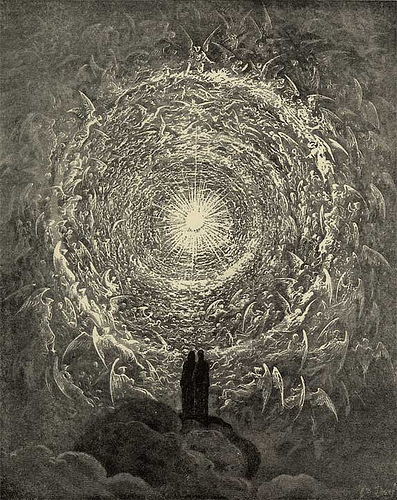


In this talk, I am going to focusing primarily on the idea of God we come across in Plato’s Timaeus dialogue, a dialogue about the origin of the world. Plato’s cosmology has similarities with the cosmologies offered by numerous pre-Socratic philosophers, while also standing apart from them in many ways. Principally, Plato holds that the world came into being rather than always having been, and he has a divine creator (the Demiurge) who is distinct from the cosmos. This places him in contrast with the majority of Presocratics, who saw the cosmos as eternal (although several suggested it goes through periods of unity and dissolution), and who saw the force or principle responsible for the order of the cosmos as identifiable with the cosmos. This is particularly true of Parmenides and Heraclitus. It is the refusal to identify the world with the source of its own creation that makes Plato so distinct from his predecessors (and successors, principally Aristotle), and so attractive from an Abrahamic standpoint. However, as I hope to show over the space of this discussion, we must be extremely hesitant when we try to too strongly identify Plato’s Demiurge with the God of Genesis.

But first, a few words about the cosmological ideas that preceded Plato.

Philosophical-cosmological enquiries in Greece seemed to have begun with the Milesian philosophers. The Milesians sought to identify the foundational substance of the cosmos, the arkhē, a word that doesn’t have a direct parallel in English but has connotations relating to ‘origin’ and ‘first principle.’ The notion of the ordering principle of the cosmos appears again and again in Greek cosmological and cosmogonic thought. Thales seemingly identified the arkhē with water, Anaximander with an abstract substance devoid of characteristics known as the apeiron, the ‘boundless.’ Anaximander’s arkhē is of particular interest as it is spoken of in language normally reserved for Zeus, suggesting that it has divine characteristics. As the foundational substance of the cosmos has a divine dimension to it, this suggests something of divinity to the world itself, that the divine is identifiable with the cosmos (or with the facet of the cosmos that brings the cosmos about).

The relationship between the cosmos, its first substance, its ordering principle and the divine becomes most interesting in relation to Heraclitus, who blurs the lines between first substance and foundational principle, and evocatively (from a Christian perspective) calls the principle of existence (that is, the principle of ever-persistent change) the Logos. That is a large gap between human perspective on these things and their reality, though, with Heraclitus telling us that ‘[t]o God all things are beautiful and good and just, but humans have supposed some unjust and others just.’ [DK 22B102] Heraclitus is often described as a pantheist, and I do not feel that this is an inaccurate description. The cosmos for Heraclitus is defined by flux, the law of this flux is described various as ‘fire,’ Logos and God, leading to the view that cosmos is, itself, God, bringing about its own existence eternally.

I mention this as contrast for what we will now discuss regarding Plato.

Often, it is said that Plato hates the world, and though he is calling on us to rise above it, we shouldn’t take this to mean that Plato necessarily despises the world. This is a rather Neoplatonic reading of Plato though, Plato according to the Gnostics, perhaps. The world isn’t wicked (at least not in this dialogue); it is imperfect, but only as imperfect as raw necessity demands of it. Indeed we are told explicitly that ‘the god wanted everything to be good and nothing to be bad, so far as that was possible, and so he took over all that was visible -not at rest but in discordant and disorderly motion- and brought it from a state of disorder to one of order, because he believed that order was in every way better than disorder.’ [Tim. 30a] It is interesting that we are offered something that resembles a motivation for the act of creation here. Seeing the state of chaos before him, the Demiurge sought to make it better by bringing it as close to perfection as possible. In Platonic metaphysics, the maker of a thing requires a model, or Form, to work by, and so does the Demiurge (of course immediately problematising attempts to make the Demiurge fully identifiable with the God of Genesis, who has no need of anything beyond Himself to produce the world.) The maker must have used a perfect model, as the maker is good and thus would want to produce a creation as close to perfection as a thing that has come to be can. Further, the Demiurge doesn’t make the world as much as he shapes it out of something that existed previous to the cosmos we now inhabit.

According to Francis Cornford, Plato ‘…believed in the divinity of the world as a whole…’ but I am not sure that that follows from the general flow of Platonic thought. To begin, we need to realise that Plato’s created world, like us mortals, possesses a soul. At first, it is tempting to assert that it is the soul that is the ‘divine’ element, perhaps because of its position of authority over the material world.  However, this is not clearly the case due to the peculiar composition of the soul. In a word, the souls ‘divine’ credentials are suspect. The Platonic soul, both that of individuals and of the world, partakes in both the corporeal and immaterial realms, having both the characteristics of being eternal and unchanging and of being ‘…unlike the Forms in that it is alive and intelligent, and life and intelligence cannot exist without change.’ [Plato’s Cosmology p. 63-4] Cornford here references Sophist 248e]  Thus, it is not as simple a task as declaring the soul to be the ‘divine’ component of a human being or of the world in general- it is, rather, the part that most strongly resembles and partakes in the divine realm, and has the potential to become more like it. As such, if we are right that the divine is wholly and unchangingly good and true, in the same sense that the Forms are, it simply does not follow that, soul or not, the world can be conceived of as divine in Plato’s view. It permits variation and changeability, it has impure elements to it and, finally and most importantly, it became, it was not always. ‘Furthermore, whilst the world soul might continue existing for all time, its continued existence is contingent on God’s will…’ [Johansen, T.K.; Plato’s Natural Philosophy; a Study of the Timaeus-Critias (Cambridge University Press, Cambridge, 2004)]

We should also take note of the Olympian gods and how they figure in the greater Platonic cosmology. To begin with, Plato makes an odd move and takes a veritable leap-of-faith regarding the traditional genealogies of the gods, calling on us to ‘take on their word’  the genealogical accounts of the gods offered to us by ‘descendants of gods [who] must, no doubt, have had certain knowledge of their own ancestors.’  Though he does recognise that these genealogies ‘speak without probable or necessary proofs’ we are asked to ‘follow established usage and accept what they say.’  This leaves us in something of a quandary, but not an insurmountable one. The focus of this passage is on the actual form of worldly existence the traditional gods have, so it may not be too difficult to swallow a tacit approval of the traditional genealogies, under the recognition that we, of course, do not know how they came to be, and that these stories have been around for as long people have told stories about the gods. Perhaps all Plato is saying here is that ‘None of us know where the gods came from, and thus these tales, for as much as they do not stand at odds with reason, are just as likely as any other myth.’ We do not have here an in-depth discussion about the nature of the gods, or their character, merely a vague nod in the direction of tradition. One scholar helpfully observes that in other dialogues Plato recognises that the genealogies are ‘hard to censure because of their antiquity’. [Plato’s Cosmology, p. 138 (footnote)]

It is worth mentioning here that there is always a tension between traditional religion and the kind of philosophical cosmology the Presocratics had been engaging in. However, I emphasise that this ‘tension’ was not something necessarily insurmountable and is often very ambiguous in nature. Although, for example, Anaximander offers an explanation for the source of thunder and lightning in purely naturalistic terms, a phenomenon that was traditionally associated with Zeus, this does not mean that he did not believe in the Olympian gods, or that they weren’t worthy of worship. No Christian’s God is entirely identical with any other Christian’s, and there is no reason to assume it would have been otherwise for the Greeks (indeed, their gods were indubitably protean in nature). It is only in the defiant monotheism of Xenophanes that we see something that closely resembles rejection of the Olympian gods and cynicism toward religion, and even then I am hesitant describing it as an ‘outright’ rejection. It is an inevitability that people with questioning minds would have made perhaps uncomfortable enquiries into the nature and origins of the gods of the civic cults, but this does not mean that they were rejecting them (not even the atomists threw the gods out!): they are simply asking for clarification.

Regardless of the specific details of their origins, the Timaeus account does not question the existent of the celestial gods. The gods are placed in a privileged position in this cosmology, their lot being to create ranks of mortal creatures. This must be done through an agent distinct from the Demiurge, as anything made through him is indissoluble. These inferior gods, then, must produce the other forms of life, whose lot it is to change and vary and die.  These gods, though, are still at best perhaps only quasi-divine, for though they will never meet death, they ‘are not immortal nor indissoluble altogether.’ Seeing as eternity has been a characteristic associated with divinity since at least the time of Thales, this fact is enough to qualify the gods of Olympus as they appear in this cosmology as failing to qualify as divine, again for much the same reason as the world itself is not divine: they came to be.

Finally, there is the question of the Demiurge itself. As said above, this being does not qualify for strict comparison with the Abrahamic god: it is not all-powerful, it required things beyond itself in order to create, the material of the world was pre-existent and it required intermediaries in order to bring about living creatures. Is, then, the Demiurge divine? This is an extremely difficult question to answer, not least because it is very unclear if the Demiurge is intended to be taken literally or metaphorically.  We have little reason to believe that the Demiurge came into being. It seems far more likely that the Demiurge can be said to either have always been, or that it stands outside of time as we comprehend it altogether (given that the Timaeus account includes the creation of time with the cosmos, this seems likely). As such, we can conclude that the Demiurge is eternal and, thus, not corporeal. Further, it is through the Demiurge that Reason comes to overcome chaotic Necessity in the formation of the world; Reason, of course, being the characteristic that the mortal needs to cultivate in their soul in order to grasp the eternal splendour of the Forms and the quasi-divine element of the World-Soul itself. All of this considered, regardless as to whether or not the Demiurge is intended to be understood as an actually existent being or a metaphor for the effect of reason over matter, we can perhaps cautiously suggest that the Demiurge is at least somewhat divine.


The Demiurge, then, is an odd god. Powerful, though not all-powerful, benevolent but somewhat impersonal. Plato’s Demiurge is more like the God of the deists than of the theists: this is nature’s god, not Israel’s. It does not seem that we can really have a relationship with it, and Plato does not call for us to worship the Demiurge. Indeed, Plato in this period of his writing is not as concerned with worship as he is with the idea that the mortal’s soul can become godlike (though his earlier discussions of piety for the gods are for more traditional). Indeed, Plato is not attempting to create scripture here (the dialogue begins with a warning that it is unlikely that we’ll ever be able to truly know how the world came to be, or who made, and even if we did discover this, it is still doubtful that we’d be able to proclaim it to that many people). Plato is here doing what he does best: he is speculating, story-telling: philosophising. He is trying to grasp as close towards truth as he can, a truth that he knows he can never be sure of. 


Wednesday, 21 May 2014

Reacting to the Reactionaries: Racism and The Dark Enlightenment


Being the experienced road-warrior of the information highway I am certain you are, dear reader, you’ve probable come across a peculiar online meta-movement known as ‘The Dark Enlightenment.’ If you haven’t been introduced, allow me the honours. The Dark Enlightenment isn’t a political party or a front or even an organisation, it’s a loose collection of ideas and ideologues, self-described as ‘neo-reactionary’, a somewhat paradoxical turn of phrase, to be sure. It is very difficult to define The Dark Enlightenment (though here is an attempt to define its underlying features by a neo-reactionary) but, broadly speaking, they tend to be defined by their:
  •     Rejection of universalism and egalitarianism.
  •          Preference for particularist politics over universalist politics (that is, they ‘accept’ that different people flourish under different forms of government, such as, but not limited to: monarchy, aristocracy, ‘a limited form of politea’ or a corporate-state.
  •          Rejection of democracy as, at best, a dangerous sham.
  •          Belief in the importance of ‘Human Biodiversity’ (HBD).
  •          Tendency towards libertarian economics.
  •          A surprising intellectual streak (these aren’t your run-of-the-mill neo-Nazi thugs).
  •          Insistence on realism.

And much more besides...
            
Though the movements ideological genealogy can be largely traced back to one 'Mencius Moldbug' the phrase ‘The Dark Enlightenment’ itself is an invention of rogue philosopher Nick Land (I advise the reader to cast their eyes over Land’s original manifesto, as well as his previous essays- as much as you might disagree with what he has to say, one cannot deny that he is an interesting thinker, however misguided). Largely, TDE want to see a return to ‘traditional’ societies, while often also embracing modern technology (‘archeo-futurism’ is the rather pleasing expression they use), on the insistence that these forms of hierarchical, if not outright feudal, societies are the most natural expressions of humanity. They emphasise the differences between human beings, particularly as these manifest between ‘races,’ and their opposition to the present, modernist world-order, ‘The Cathedral.’

This post won’t be a general critique of TDE, as such a thing is far beyond my powers (though another's attempt at that can be found here), rather, I am going to ask one question, focusing on a particular issue.

Should we talk to them about ‘race’?

*

When it comes to race and ethnicity, TDE insists that it is simply being ‘realistic.’ We accept that genetics play a role in the development of every other species, so why not also our own? This perspective, which they call ‘Human Biodiversity,’ or HBD, holds that racial differences between human beings is more than just skin deep. Rather, different types of human being have evolved, and this is reflected by their societies. For example, Middle Eastern societies tend to be organised along tribal principles. Societies in the Far East tend to be very focused on homogeneity and obedience, while in the West competition and individuality are held in high esteem, and so on.

Why are we so insistent that heredity doesn’t play a role in the diversity of these societies? Why do we insist that the only origin of social difference is culture, choice, and perhaps fate/chance? At most, we might be willing to admit that environment and even climate might play a role, but why are we so afraid that inherited, genetic differences might cause a certain ethnic group to favour individualism, while another will favour the family?

Such are the questions that they ask.

Now, perhaps with clenched fists and through gritted teeth, we do have to admit that we cannot reject the possibility that heredity plays some role in social diversity out of hand, however difficult that is to say. I ask the reader to look over that sentence once more before they continue, to be sure that they understood what I am saying here. I am not saying they are right, nor that ‘progressives’ are wrong. I am merely admitting that, yes, strictly speaking we cannot reject the possibility that heredity is a non-negligible factor in societal development a priori.

I will grant them this, they are entirely right to say that we live in a society where people feel ‘uncomfortable’ when discussing race, even in abstracted forms…

As I said above, TDE insist that they are being scientific about the question of race. And…well, they’re not. They’re just not. I will admit that it is not beyond the realms of possibility that we haven’t paid enough attention to genetics when it comes to human development on a macro-social scale, and a more thorough social science, which includes a look at heredity, might be desirable. But, for the most part, neo-reactionaries seem to just use the claim that ‘traditional societies where right about some stuff’ and 'we need to have a proper debate about race-realism' to, very conveniently, justify their own prejudices. Indeed, there is a vast difference between admitting the possible importance of heredity and then insisting that it primarily manifests racially (and sexually, we must not forget the often outright misogyny of this movement!).

However, an interesting opportunity might have been inadvertently presented to us here: like I said, TDE claim to be scientific, and put a great deal of statistics forward to back this claim up. Their interpretations are dubious at best, which suggests that if we, deploying a rational and more truly scientific apparatus than theirs, were to confront them with overwhelming facts to the contrary (even if we do, under the weight of incontrovertible evidence, end up accepting that we’ve underestimated the role of heredity, it hardly means that no other factor is important, nor is it say that it would even be the most important developmental factor), wouldn’t they have to accept this? 

I like to think that, in such a situation, at least some of the more sophisticated neo-reactionaries would relent to the contrary point, the more intellectually honest ones at least. But, it would most likely be a lost cause. As I’ve said, for the most part, I imagine that many of them had already made up their minds about race and gender long before Moldbug and Land appeared on the scene.
            
This, then, begs another question: should we talk to them at all?

*
            
Do we run the risk of tacitly legitimising a view point when we agree to debate with it? Consider climate change: the evidence that human activity is the primary driver of present climatological changes is overwhelming. And yet, we see an odd insistence by the media, particularly but not exclusively in America, that we should treat this as a ‘debate’ of some kind. In so doing, we run the risk of making the opposition lobby look respectable.
            
There is a serious point here. Moldbug made a comment about white supremacists that could be well used to describe TDE itself: ‘I can imagine one possibility which might make white nationalism genuinely dangerous. White nationalism would be dangerous if there was some issue on which white nationalists were right, and everyone else was wrong. Truth is always dangerous. Contrary to common belief, it does not always prevail. But it’s always a bad idea to turn your back on it. …While the evidence for human cognitive biodiversity is indeed debatable, what’s not debatable is that it is debatable …[even though] everyone who is not a white nationalist has spent the last 50 years informing us that it is not debatable …’ (Land’s own edits)
            
How do we deal with this? If we attempt to have a ‘serious discussion about HBD’ with them in order to prove them wrong, we might make them seem credible by agreeing to the debate at all. On the other hand, what if we do the opposite? What if we ignore them, or even make a point of our refusal to co-operate with them? What happens here? Arguably, we run the same risk as before: tacitly legitimising a view point, but what is even worse is that by insisting that it remain unacknowledged we make it look subversive.

A few years ago, in the UK, we were all rather worried by the British National Party (BNP), a far-right party who were suddenly doing quite well, not enough for them to have a serious chance of seeing an MP in the Commons, but the presence of three members of the BNP in the European Parliament certainly spooked the left, centre and right. Things died down, the BNP has again faded into obscurity (and now we’re all deathly worried by the bizarre spectacle that is the United Kingdom Independence Party, but I digress), but that wasn’t before their party Leader, Nick Griffin, appeared on the flagship debate programme Question Time. Things didn’t go too well for him, but that to one side, should he have been allowed on there at all? Didn't his inclusion suggest that he had something to say...?

Žižek, with his usual panache, makes a good point here. Isn’t it a little worrying that we are even considering having a conversation about ‘race-realism’ again? Of course, you might respond to this by pointing out that TDE isn’t exactly well known, but it is still worrying that a group who openly argue in favour of concepts of racial hierarchy and inequality are beginning to come across as even slightly respectable, particularly when we find ourselves being forced to concede them points, even if they are largely only academic. The point, however, is not confined to the neo-reactionaries alone, it is something that all of us who are politically aware must consider: how do we respond to the Fascists today? Do we ignore them, and hope they burn themselves out, or do we confront them and run the risk of rendering them respectable?

            
Perhaps, more properly: do we dare to ignore them? 

Wednesday, 14 May 2014

'Locked In?' Morality and Destiny in 'Locke'

            I recently had the veritable pleasure of watching Tom Hardy in a car doing an extended impression of Anthony Hopkins. Slightly unconvincing Welsh accents aside, Locke (dir. Steven Knight) was possibly the best film I’ve seen at the cinema all year, and Tom Hardy’s screen presence was engrossing, as was the simply beautiful cinematography. But, me being me, I did spend much of the film and the crème de menthe accompanied conversation afterwards considering the philosophical themes present.

            Hardy, who is the only character we see on screen, plays Ivan Locke, a ‘concrete farmer,’ a builder who specialises in laying foundations. He has just finished work the night before a major consignment of concrete is due to arrive, with which he is to lay the foundations for a new skyscraper. However, our hero made an error of judgement some months ago and got a woman named Bethen (voiced by the ever-delightful Olivia Colman in their phone conversations) pregnant. Trouble is, he already has a wife, and Bethen has just gone into premature labour before he is able to tell her what has happened. An interesting point of discussion might be whether-or-not he ever intended to tell her, we do only have his word on this, but perhaps we should leave that question to one side.

            Locke is one of the most fiercely moral characters I can recall ever seeing on the film screen. We might, perhaps, begin to think of the noble heroes of many fine and entertaining films, risking everything for the sake of right, but Ivan Locke is just a man, a normal man. He has a wife, a job and two kids. He has the air of the everyman about him. This is where his power as a character lies, his utterly ordinary life and personality mingled with an extraordinary sense of morality and duty.

            The film follows Locke’s conversations over the phone in his car, as well as slightly badly judged conversations with the imaginary ghost of his late father (these asides, though essential in many ways, could have been handled better in my humble opinion). Over the phone, he is simultaneously attempting to hold his family together while breaking to his wife the news of his sole infidelity (again, we only have his word for this but I am inclined to believe him…call me gullible), organising his work team to be in a position to deal with the approaching consignment of concrete, and reassuring the mother of his illegitimate child that he’ll be there as soon as he can be.

            And, in so doing, he more-or-less ruins his life. His wife tells him he isn’t welcome back home and, because he has abandoned them when they need him the most (it will be the largest non-military or nuclear concrete delivery in Europe), he gets the sack.

            I feel that there are two principle questions to be asked about the character of Locke:

1.      Is this a spontaneous ethical act or simply a reaction?

2.      Is this the right thing to do, and if so, why?

Originally, I was also going to address a third question, ‘Is Locke simply a narcissist?’ but, as this post has already trundled on past the 1,300 word mark, that might be left for another time.

*

            Throughout, Locke is struggling with freedom and destiny. We learn through his imaginary conversations with his father that he himself is illegitimate, that he was unwanted by his father (who he never even met until he was in his 20s). This begs the question- is Locke’s single-minded, uncompromising determination to see right by this woman and their child an authentic (used in the existential sense) act or is he just being propelled by the sins of his father? Or, more properly, by an overwhelming desire to prove to the world that he is not his father? He certainly makes a point of how much he wishes that he could show his father how unlike him he is, telling his wife that he is doing exactly the opposite of what his own father did, making sure that he is there to deal with his ‘fuck up,’ as he puts it. Wording it in such a way certainly suggests that he has little affection for the potential child, but having an appropriate emotional response is not the entirety of the ethical act.

            All this being said, however, we need not necessarily view Locke as simply reacting to the ghosts of his past, entirely motivated by outside agency (‘fallen’, to use Heidegger’s turn of phrase); rather, we can read his actions as being a transcendental ethical act, in which he risks everything to do the right thing because he has first-hand experience of how damaging doing wrong in this situation is. At one point he tells one of his co-workers about the importance of ensuring that the right kind of concrete is used in the foundation, as a flaw at the beginning of the structure will become a flaw with the whole thing: the parallels here ought to be obvious to the reader.

*

            Locke has found himself in an impossible position. His ethical duties are pulling him in a variety of different directions, and it is going to be a tremendous amount of work to satisfy the demands that the Good is making on him. He must, simultaneously, do right by: his wife, his unwanted child and his employers (perhaps, more properly, his co-workers). The most frequent ethical act we see Locke engaging in is his almost naïve honesty (he seems virtually unaware of the difference between telling his wife he had sex with another woman and telling her that it isn’t a road closure he’s arranging for work, but a ‘stop-and-go’!); he insists on telling people the truth to an almost absurd degree. For example, when Bethen asks him if he loves her he responds by saying ‘No, how can I? I don’t know you.’ Interestingly, he gives this same response when she asks if he hates her…

            Does he do the right thing?

            I would argue that what needs to be recognised is that he is in a situation where no action can satisfy all parties. Every course of action he can take is ultimately going to result in someone being harmed: if he goes home to watch the footy with his sons and wife, and goes to work the next day, he has let down a woman he did wrong by (though he frequently tells us that he only slept with her out of pity, itself an at least ethically ambiguous action) and a child he is responsible for. In this regard, the film resembles the often-marched-out thought experiments of moral philosophy lectures. ‘If pulling the lever dooms one man but saves three, ought I do it?’ The simplistic answer the baser Utilitarians offer us (although, I’m not sure I’ve ever met one who was entirely comfortable with answering such a question, which I personally take as a good sign for their ethical development) is that ‘Yes, in such a situation the right thing to do is to end the life of one to save the lives of many.’

            That we express discomfort at this formula is evidence enough that treating moral issues in such a simplistic way is at least an incomplete approach, or that it warrants further discussion if nothing else (I reiterate my point that I have doubts that any morally-healthy adult would be wholly comfortable with the ‘logical’ solution, but that opens a whole new can of philosophical worms…), though that is not say that the hedonic calculus ought never to be deployed. However, I fear we are digressing from the topic at hand. This is a glorified film review, not a Prolegomena to Any Future Moral Philosophy.

            I do not have an answer to the question ‘Does Locke do the right thing?’, and I don’t believe that an answer is actually available for that question. Morality is not a matter of reducing situations to easily quantifiable pleasure-pain ratios. That Locke causes more people immediate grief than he would if he had ignored Bethen is simply not the end of the story here (nor is it when we start talking about long-term felicity, the actions of the agent in the moment warrant the attention of the philosopher). There are moral demands made upon us by life, in all its sticky, smelly, messy ambiguity, than any single ethical theory is ever likely to render as a simple formula. Locke as a film might be spoken of as being about the impossibility of the purely ‘right’ action, and this is its philosophical interest and importance.